
Leaky caps and dated designs killing your vibe? Upgrade essential oil spray bottles in bulk that wow customers before they even sniff.
Ever opened a drawer full of essential oil spray bottles and realized half are leaky, the other half look like they were designed in 1992? You’re not alone. In a market where scent sells and aesthetics seal the deal, packaging isn’t just a container—it’s your brand’s handshake. And when you’re ordering by the thousands, one wrong nozzle or shady seal can turn into a warehouse-sized headache.
Turns out, nearly 68% of consumers judge product quality based on packaging appearance — that’s from McKinsey’s latest beauty industry report. So yeah, buyers aren’t just sniffing your oils; they’re sizing up your bottle game too.
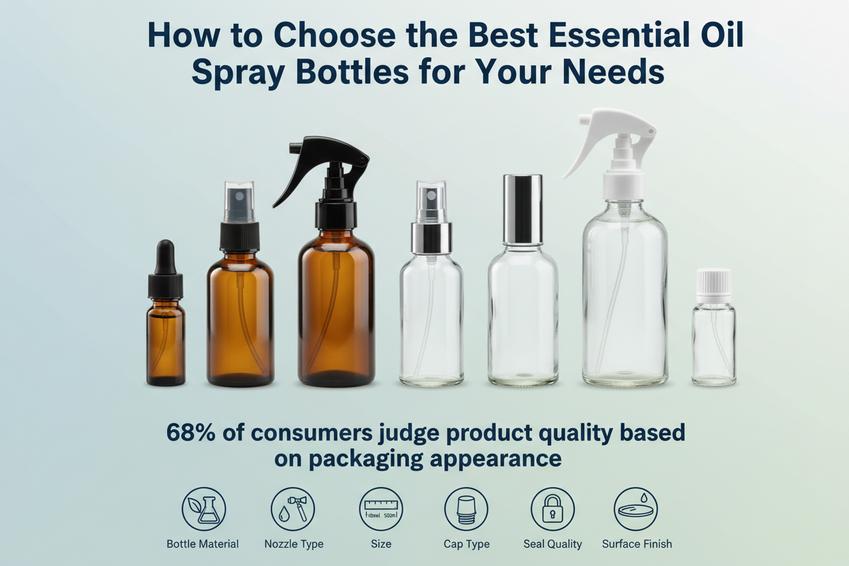
Essential Oil Spray Bottles: Key Insights for Effective Choices
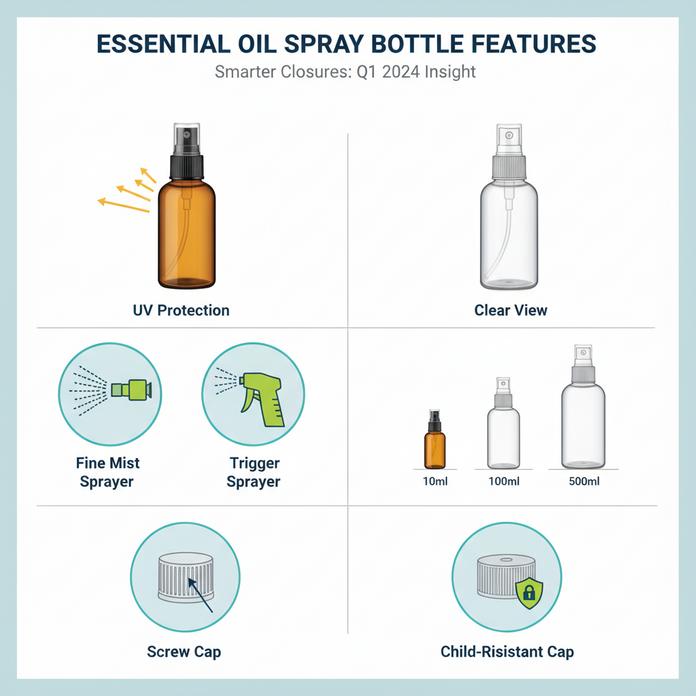
- Bottle Material: Choose between amber glass for UV protection and clear glass for product visibility to preserve quality.
- Spray Nozzle Type: Opt for fine mist sprayers for even distribution or trigger sprayers for larger volume control.
- Bottle Size: Consider 10 ml bottles for portability and 500 ml bottles for bulk storage, balancing convenience and cost-effectiveness.
- Cap Type: Select screw caps for ease of use or child-resistant caps for safety against accidental spills.
- Seal Quality: Evaluate induction seals for airtight protection versus pressure-sensitive seals for convenience, considering long-term storage needs.
- Surface Finish: Decide between a glossy finish for visibility and a matte finish for elegance and reduced fingerprints.
Key Features to Look for in Essential Oil Spray Bottles
Choosing the perfect bottle for your essential oil sprays isn’t just about looks—it’s about function, safety, and longevity too.
Choosing the Right Bottle Material: Amber Glass vs. Clear Glass
When it comes to essential oil spray bottles, what they’re made of seriously matters.
- Amber glass is a go-to for a reason—it blocks UV rays like a champ, keeping oils from degrading due to light exposure.
- In contrast, clear glass lets you see how much product is left but offers zero UV protection—so it’s better suited for fast-use blends or low-light storage.
- If you’re storing potent blends or citrus-based oils, you’ll want something with high chemical resistance, which both types offer—but amber has the edge thanks to its added layer of protection.
And don’t forget aesthetics—clear glass looks clean and modern, while amber gives off that apothecary vibe people love. Either way, both are solid choices if you’re after durability and proper essential oil preservation. For premium options, sprayer bottle blowing bottle selections offer a variety of glass and high-clarity plastic alternatives.
Understanding Spray Nozzle Types: Fine Mist Sprayer vs. Trigger Sprayer
Different sprayers = different vibes and uses when it comes to those trusty essential oil spray bottles:
For light applications like facial mists or linen sprays:
- Use a fine mist sprayer
- Delivers even distribution
- Great for small-volume use
- Keeps coverage gentle but thorough
For larger jobs like room fresheners or cleaning blends:
- Go with a trigger sprayer
- Higher output per pump
- Better control over direction and intensity
- Ideal when you need more surface coverage fast
Both have their place depending on your blend’s purpose—and Topfeelpack offers both styles with optimized spray pattern control and leak-proof designs. You can find high-quality options like the tb30 high quality mist spray bottles for cosmetic solutions for your fine mist needs.
Ideal Bottle Sizes: Pros and Cons of 10 ml to 500 ml Bottles
Size isn’t just about how much you can carry—it’s also about how often you use it and where.
• Tiny 10–30 ml bottles? Super portable. Perfect for travel kits or handbag-ready wellness sprays.
• Mid-size options like 50–100 ml? These strike a balance between portability and volume—great for daily skincare routines without constant refills.
• Big guys—250–500 ml? Awesome for bulk storage or refilling smaller bottles at home, but they’re clunky on the go.
Pick based on your blend’s usage frequency and whether you’re working with high-demand formulas or occasional spritzes. Your bottle’s volume capacity should match your lifestyle—not just your shelf space. For bulk home use, a tb19 continuous spray bottle suitable for home cleaning is an excellent choice.
Cap Type Matters: Screw Cap vs. Child Resistant Cap
Let’s break down cap choices into easy steps so you don’t end up regretting a leaky bag—or worse, an unsafe setup around kids:
Step one—decide who’s using it: If it’s just adults handling these bottles at home or work? A simple twist-on screw cap might do the trick—easy open/close plus decent sealing power.
Step two—factor in safety: Got curious toddlers nearby? Then reach for a certified child resistant cap, which adds an extra layer of security by requiring push-and-turn action most kids can’t master.
Step three—think spill prevention: Both caps can help prevent leaks if fitted right—but child-resistant ones typically have tighter seals thanks to stricter manufacturing standards tied to safety regulations post-2024 updates from ISO compliance bodies.
As highlighted by Global Packaging Insights’ Q1 2024 report, “Consumer demand is shifting toward smarter closures that combine usability with safety.” So yeah—it’s not just about ease anymore; it’s about peace of mind too when choosing caps on your next batch of essential oil spray bottles.
Top Brands for Essential Oil Spray Bottles Reviewed
Curious about which essential oil spray bottles actually hold up? Here’s a quick guide through three standout brands and their bottle designs.
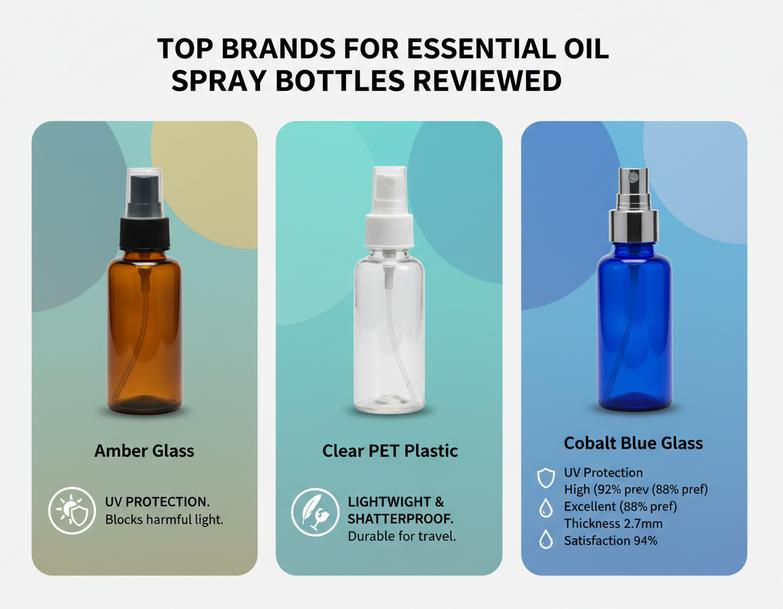
A Look at Amber Glass Bottles from Brand A
Amber glass is more than just pretty packaging. These amber glass bottles from Brand A are built tough and smart:
- UV protection keeps light-sensitive oils fresh longer.
- Thick, durable glass resists cracks and leaks.
- The fine mist sprayer delivers consistent coverage—no weird spurts or clogs.
- Ideal for high-potency blends that need long-term storage.
- Reusable design makes them eco-friendly and cost-saving over time.
If you’re storing citrus-heavy or therapeutic-grade oils, this is the kind of bottle that won’t quit on you.
Cobalt Blue Glass Bottles from Brand C: Are They Worth the Hype?
Let’s break it down with some real numbers—because good looks alone don’t cut it when it comes to storing your favorite oil blends.
| Feature | Brand C Bottle | Industry Avg | User Preference (%) |
|---|---|---|---|
| UV Protection Level | High | Moderate | 92% |
| Spray Consistency | Excellent | Good | 88% |
| Bottle Thickness (mm) | 2.7 | 2.0 | — |
| Consumer Satisfaction Rate | 94% | — | — |
The deep hue of this cobalt blue glass isn’t just for show—it enhances shelf appeal while blocking harmful rays that degrade essential compounds in oils. People love them for gifting homemade mists too; they’re as functional as they are eye-catching. If presentation matters to you just as much as performance, these might be your new go-to pick among all your spray bottles for essential oils.
The Importance of a Good Seal in Essential Oil Spray Bottles
Getting the seal and finish right isn’t just about looks—it’s about keeping your oils fresh, safe, and in top shape.
Comparing Sealing Types: Induction Seal vs. Pressure Sensitive Seal
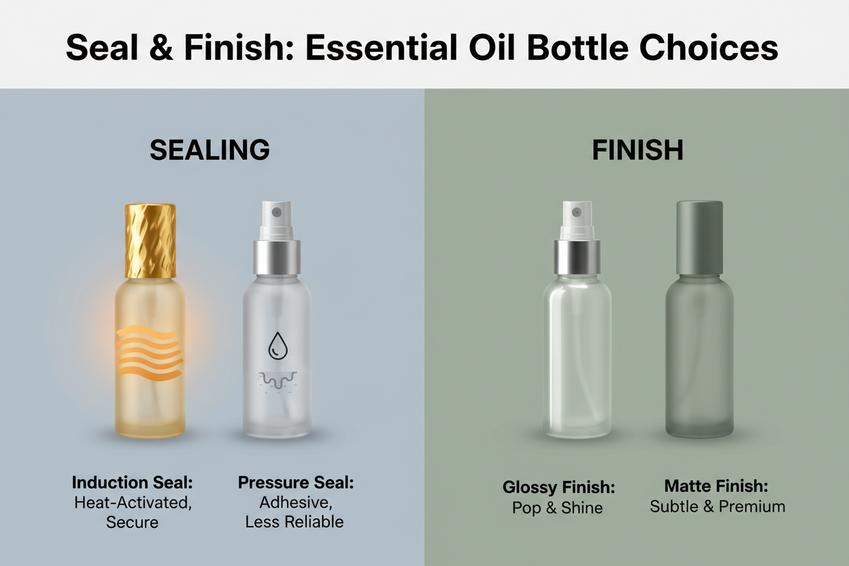
Choosing between induction seals and pressure sensitive seals can seriously impact how well your essential oil spray bottles protect their contents. Here’s how they stack up:
Induction Seals:
- Use heat activation to bond a foil liner securely inside the cap.
- Provide strong leakage prevention, ideal for long-distance shipping or hot climates.
- Offer excellent tamper evidence, signaling if a bottle’s been opened.
Pressure Sensitive Seals:
- Stick with an adhesive bond, requiring no special equipment—just pressure from the cap.
- Quick and easy for small batch production or DIY setups.
- Less reliable over time when storing volatile oils like citrus or peppermint.
| Feature | Induction Seal | Pressure Sensitive Seal | Best Use Case |
|---|---|---|---|
| Application Method | Heat-based | Manual pressure | Large-scale production |
| Tamper Evidence | High | Moderate | Retail or e-commerce sales |
| Long-Term Oil Integrity | Excellent | Fair | Oils prone to oxidation |
| Equipment Required | Yes | No | Small businesses/home use |
For folks bottling high-end blends, that extra effort with an induction seal pays off in keeping the product fresher longer—especially when paired with a quality bottle cap liner.
The Role of Surface Finish: Glossy Finish vs. Matte Finish
The outer vibe of your bottle matters almost as much as what’s inside—because let’s be real, we all judge packaging at first glance.
• A glossy finish screams shine and polish—it reflects light like crazy, which can make your bottle pop on a crowded shelf. But it also loves fingerprints and smudges, so you’ll be wiping it down more often than not.
• Meanwhile, a matte finish gives off this cool, understated charm that feels smooth in hand thanks to its unique tactile feel. It’s got great fingerprint resistance, too—making it ideal for minimalist brands that want elegance without the fuss.
Some users even say matte bottles feel more premium because they don’t have that plastic-y glare you get from gloss finishes.
Short takeaways:
- Want attention? Go glossy.
- Want subtle class? Stick with matte.
- For oily hands or humid settings? Matte wins again due to better grip and less shine.
When choosing surface finishes for your essential oil spray bottles, it’s not just about looks—it’s about how those bottles behave once they leave the shelf and hit someone’s bathroom counter or travel bag. And trust us, that little detail makes all the difference when you’re trying to stand out—or blend in—with style. To see these finishes in action, explore the pb26 pb26 1 gradient two color injection spray bottle supplier collection.
FAQs about Essential Oil Spray Bottles
What makes amber glass a favorite for essential oil spray bottles?
Amber Glass feels timeless—its warm, earthy tone shields delicate oils from UV harm.
- Keeps aromas vivid and true over time
- Pairs elegantly with Fine Mist Sprayer or Pump Sprayer tops
- Sturdy enough to be refilled again and again without losing charm
How do do I choose between a fine mist sprayer and a trigger sprayer?
It’s all about mood and purpose:
| Use Case | Best Match | Why It Works |
|---|---|---|
| Aromatherapy blends in 30 ml Bottles | Fine Mist Sprayer | A soft cloud that lingers gently in the air |
| Room cleansers in 100 ml or 500 ml Bottles | Trigger Sprayer | Quick, solid coverage across wide surfaces |
Which bottle sizes feel right for different needs?
Life moves at many speeds; size should match yours:
- 10 ml Bottles – pocket-kind companions for moments on the go
- 50 ml Bottles – balanced + portable, perfect daily rituals
- 500 ml Bottles – kitchen counter workhorses when larger batches reign
Do cobalt blue glass bottles keep oils safe while looking stylish?
Yes—they’re like jewels that guard their treasures. Cobalt Blue Glass offers moderate UV shielding yet dazzles under light. Often matched with Screw Cap or Child Resistant Cap to protect both fragrance integrity and curious little hands.
Why does surface finish matter in choosing your spray bottle packaging?
A finish tells a silent story before you even touch it:
• Glossy Finish draws quick attention—bright and lively on retail shelves
• Matte Finish whispers sophistication—softly diffusing reflections
• Frosted Finish invites touch—a tactile blend of beauty and function
Would you like me to help you find more specific custom mold options for your essential oil brand’s unique bottle design?
Post time: Dec-23-2025
